
Overview
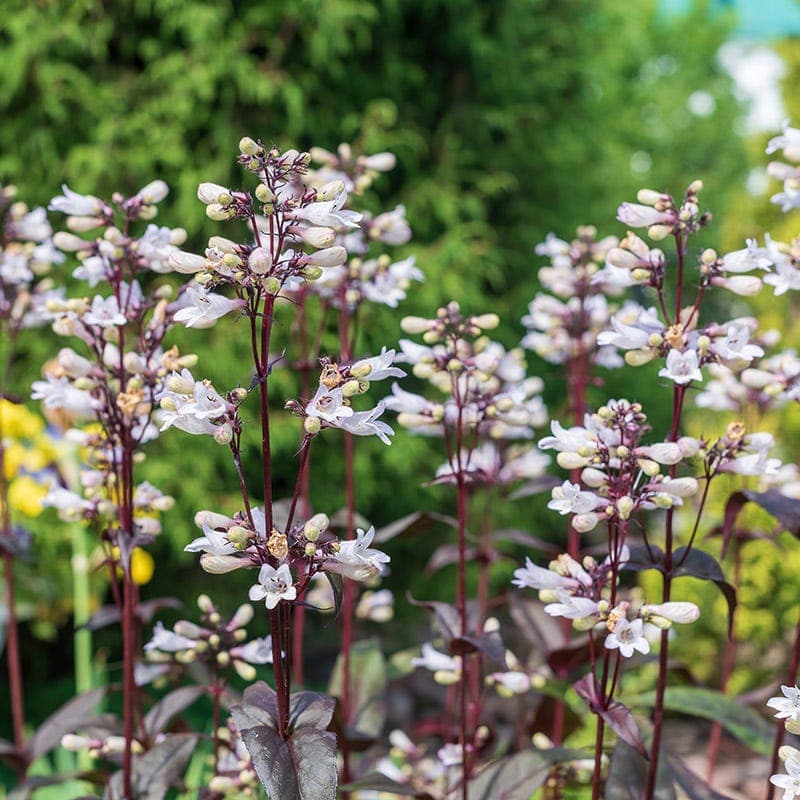
Digitalis (Digitalis purpurea and hybrids), commonly called Foxglove, produces statuesque spikes of tubular, spotted flowers in early summer. The Camelot Mix offers a range of colors — cream, lavender, pink, and purple — on plants reaching 4–5 feet. Often grown as a biennial (blooms in year 2) but self-seeds reliably, creating a perpetual colony. The Camelot series is bred for perennial behavior.
Sun & Exposure
- Ideal: Part shade with morning sun
- Tolerated: Full sun in cool climates with adequate moisture; deep shade reduces flowering
- Dappled light under tall trees is ideal
Watering
Prefers consistently moist soil, especially during active growth.
- Water regularly; do not allow to dry out completely
- Mulch to retain soil moisture
- More drought tolerant once established, but performs best with consistent moisture
Soil & Planting
- Rich, humus-rich, well-draining soil
- Slightly acidic to neutral pH (5.5–6.5)
- Plant in spring or fall; space 18–24 inches apart
- Work compost in generously at planting time
Fertilizing
- Apply a balanced slow-release fertilizer in early spring
- Top-dress with compost annually
Pruning & Deadheading
- After the main spike finishes, cut it back to the basal rosette — side shoots will develop and produce secondary spikes
- Allow some spikes to set seed if you want self-seeding to continue the colony
- Remove entire plants after they finish their lifecycle (typically after year 2)
Winter Care
Hardy in zones 4–9 as a biennial or short-lived perennial. The basal rosette overwinters and blooms in year 2. Mulch lightly in colder zones.
Common Issues
Problem
Crown rot
Cause
Overly wet or poorly drained soil
Problem
Aphids on flower spikes
Cause
Common; blast off with water or use insecticidal soap
Problem
Failure to bloom in year 1
Cause
Normal biennial behavior — blooms in year 2
Problem
Short lifespan
Cause
Normal; relies on self-seeding for continuity
Tips
- All parts of Digitalis are toxic — wear gloves and wash hands after handling
- Hummingbirds and bumblebees are primary pollinators
- Spectacular as a cut flower — harvest when the lowest third of the spike is open
- Plant in drifts for the most dramatic effect
- Self-seeds freely; thin seedlings in fall or spring