
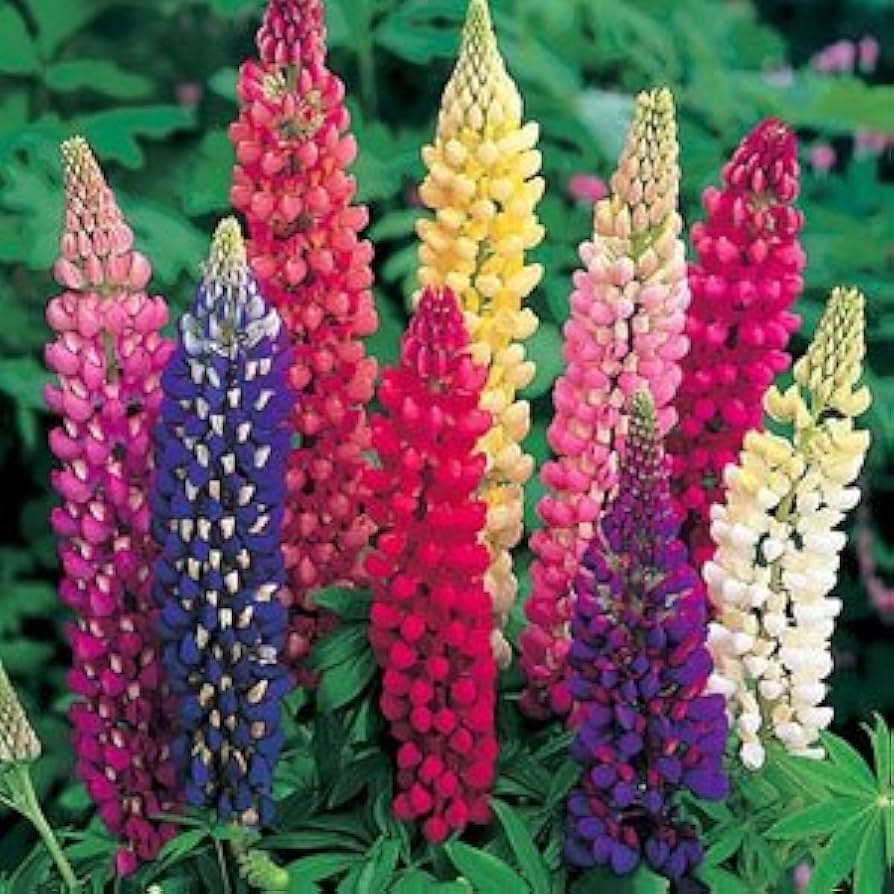
Overview
Lupines (Lupinus × hybridus) are one of the most dramatic early-summer perennials, producing tall, densely packed flower spikes in a wide range of colors above attractive finger-like foliage. The Russell Mix offers an outstanding blend of colors including blues, purples, pinks, reds, and bicolors. Lupines are nitrogen-fixing legumes — they actually improve soil fertility as they grow.
Sun & Exposure
- Ideal: Full sun to light shade
- Best performance: Cool climates with full sun
- In hot regions, afternoon shade extends the bloom season
- Thrives in the Pacific Northwest and northern states; struggles in the Deep South
Watering
Prefers moderate, consistent moisture — neither waterlogged nor bone dry.
- Water regularly during spring growth and blooming period
- Reduce watering after blooms finish and in summer heat
- Good drainage is critical; crown rot occurs in wet soil
Soil & Planting
- Prefers well-draining, slightly acidic, sandy or loamy soil (pH 5.5–6.5)
- Does not thrive in heavy clay or alkaline soil
- Plant in spring or fall; space 18–24 inches apart
- Deep taproot — does not transplant well once established; plant young
Fertilizing
As nitrogen fixers, Lupines make their own nitrogen.
- Avoid high-nitrogen fertilizers, which cause excessive foliage and reduced flowering
- A phosphorus-rich fertilizer (e.g., bone meal) at planting supports root development
- Top-dress with compost in spring
Pruning & Deadheading
- Deadhead promptly after blooming to encourage a second flush and prevent aggressive self-seeding
- Cut spent spikes down to lateral buds or basal foliage
- Allow some pods to mature if you want the plant to self-seed
Winter Care
Hardy in zones 4–8. Mulch crowns lightly after frost. Lupines prefer cool winters and may decline in zones 8–9 due to summer heat. Short-lived in warm climates.
Common Issues
Problem
Powdery mildew
Cause
Common in humid conditions; ensure air circulation
Problem
Aphids on flower spikes
Cause
Very common; use insecticidal soap or strong water spray
Problem
Short lifespan (3–5 years)
Cause
Normal; self-seeds to maintain colony
Problem
Failure to thrive
Cause
Alkaline or heavy clay soil
Tips
- Toxic if ingested — all parts, especially seeds
- Superb cut flower; harvest when lower third of spike is open
- Self-sown seedlings may not match parent colors; divide or save named variety seed for consistency
- Pairs beautifully with Delphinium, Aquilegia, and roses in early-summer borders