
Overview
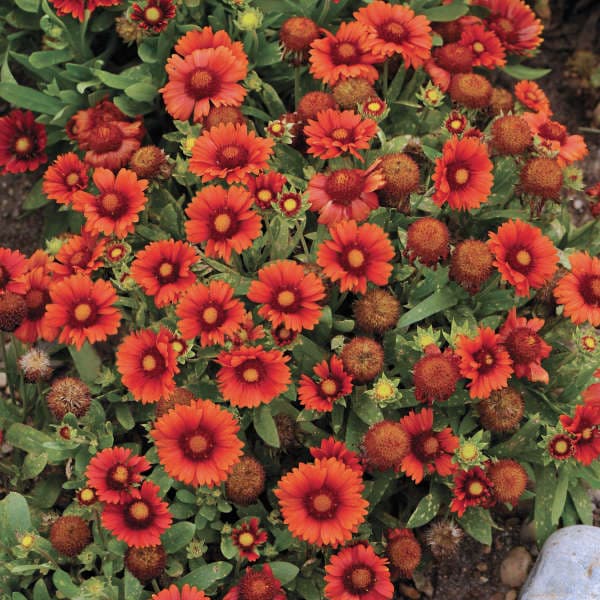
Gaillardia (Gaillardia × grandiflora), commonly called Blanket Flower, produces vibrant red, orange, and yellow daisy-like blooms from early summer right through hard frost. The Arizona series — Apricot and Red Shades — are compact, free-blooming plants that stay 10–14 inches tall. Native to the American West, Gaillardia is built for heat, sun, and dry conditions.
Sun & Exposure
- Ideal: Full sun (6+ hours daily) — needs all the sun it can get
- Avoid: Any significant shade — plants become leggy and bloom poorly
- Heat and drought only make it perform better
Watering
One of the most drought-tolerant perennials available.
- Water regularly the first season only; minimal watering once established
- Overwatering is the primary cause of poor performance and plant death
- Thrives in xeriscape and dry border conditions
Soil & Planting
- Thrives in poor, sandy, or gravelly soil with excellent drainage
- Rich, moist soil leads to short-lived, floppy plants
- Neutral to slightly alkaline pH (6.5–7.5)
- Plant in spring; space 12–18 inches apart
Fertilizing
No fertilizer needed — and best avoided. Rich soil shortens the life of Gaillardia.
Pruning & Deadheading
- Deadhead regularly to encourage continuous blooming; a prolific rebloomer when spent flowers are removed
- Shear plants back by one-third in midsummer if they become scraggly — they'll rebound quickly
- Leave some seed heads for birds and self-seeding
Winter Care
Hardy in zones 3–10. One of the most heat- and cold-tolerant perennials. In wet winter climates, ensure drainage is perfect as wet winter soil is the main killer.
Common Issues
Problem
Short lifespan (2–3 years)
Cause
Normal for Gaillardia; self-seeds to replace itself
Problem
Crown rot
Cause
Wet or poor drainage
Problem
Leggy, flopping plants
Cause
Too much shade or overly rich/moist soil
Problem
Reduced blooming
Cause
Needs deadheading
Tips
- Exceptional for hot, dry slopes, rock gardens, and gravel gardens
- Excellent cut flower with a long vase life
- Attracts butterflies and bees throughout the season
- Pairs naturally with Echinacea, Coreopsis, and ornamental grasses