
Overview
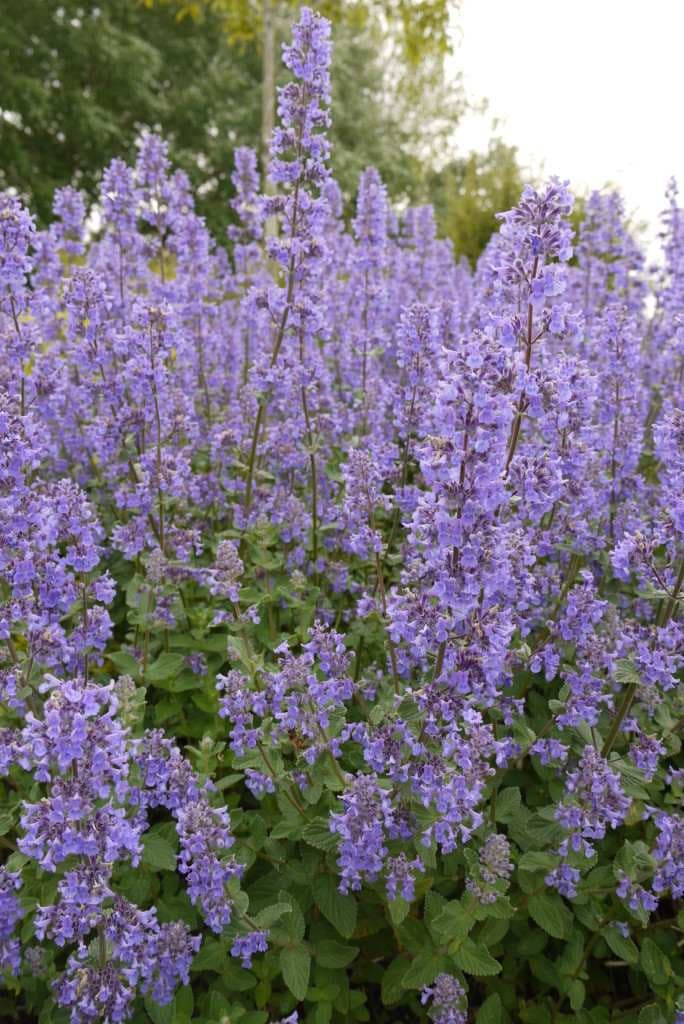
Nepeta (Nepeta spp.), commonly called Catmint, is one of the most versatile and long-blooming perennials available. 'Summer Magic' produces cascading mounds of fragrant silver-green foliage covered in small lavender-blue flower spikes from late spring through fall. It is exceptionally tough, drought tolerant, and beloved by bees — and offers almost no maintenance once established. Despite the name, garden Catmint is far less attractive to cats than true catnip (N. cataria).
Sun & Exposure
- Ideal: Full sun (6+ hours daily)
- Tolerated: Part shade — plants will be larger and less compact, with somewhat reduced flowering
- Thrives in hot, dry conditions
Watering
One of the most drought-tolerant perennials in the garden.
- Water regularly during the first season to establish
- Established plants are very drought tolerant; water only during extended dry spells
- Do not overwater — well-draining soil is important
Soil & Planting
- Tolerates poor to average, well-draining soil
- Does not require rich soil — lean soil produces more compact, floriferous plants
- Neutral to slightly alkaline pH (6.5–7.5)
- Plant in spring; space 18–24 inches apart
Fertilizing
Minimal fertilization needed.
- A light application of balanced fertilizer in early spring is sufficient
- Avoid high-nitrogen fertilizers
Pruning & Deadheading
The key to repeat blooming is shearing after the first flush.
- After the first major bloom (late spring/early summer), shear the entire plant back by one-half to two-thirds
- Within 3–4 weeks, fresh growth and a new flush of blooms will emerge
- Continue deadheading or shearing through the season for near-continuous bloom
- Cut to a few inches above ground in late fall or early spring
Winter Care
Hardy in zones 3–8. Extremely cold-hardy. Reliable and tough in northern winters.
Common Issues
Problem
Flopping or sprawling
Cause
Normal mounding habit; shear back to tighten
Problem
Reduced second bloom
Cause
Needs shearing after first flush
Problem
Root rot
Cause
Overly wet or clay soil
Tips
- One of the best plants for long-season bee forage
- Deer and rabbit resistant — a huge advantage in many gardens
- Fragrant foliage when brushed or touched
- Excellent edging plant, draping over walls or path edges
- Beautiful paired with roses, where it mirrors the classic English garden combination