
Overview
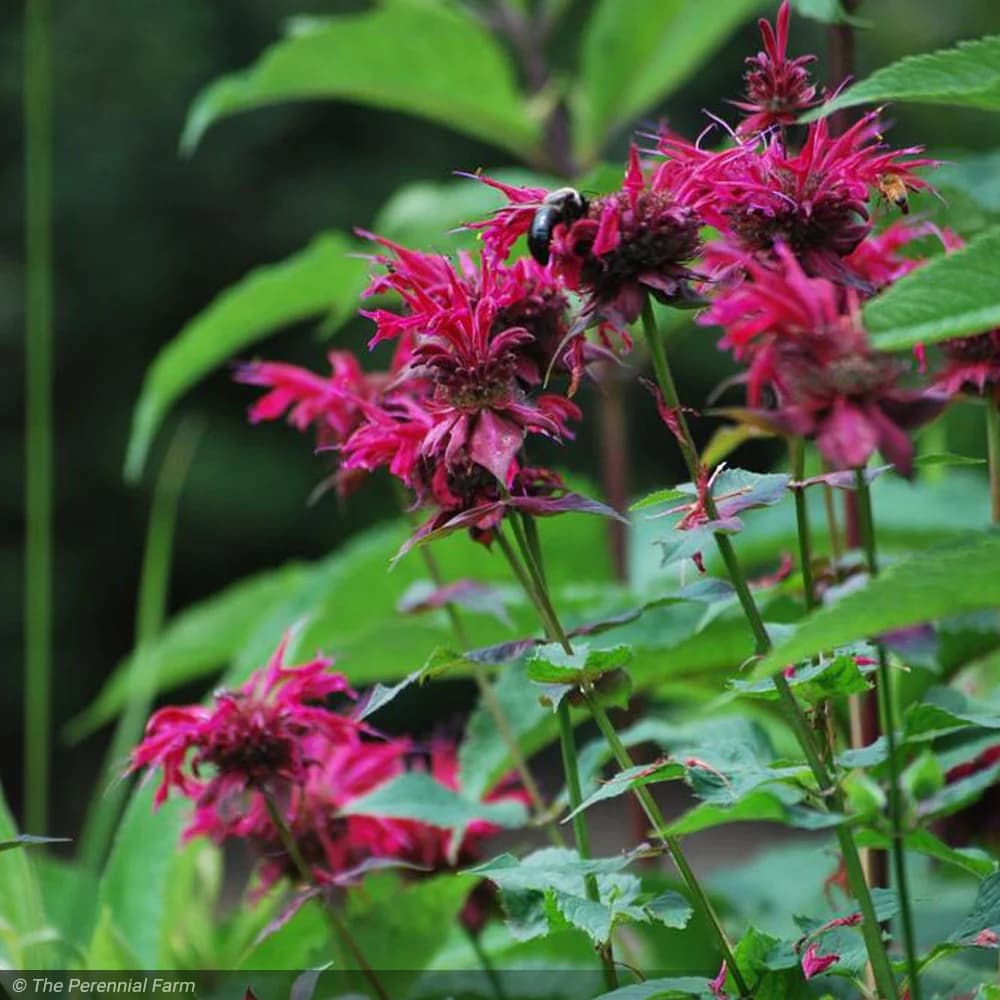
Monarda (Monarda didyma and hybrids), commonly called Bee Balm or Bergamot, is a North American native perennial with aromatic foliage and shaggy, whorled flower heads in vivid shades of red, pink, and coral. We carry 'Fire Marshall' (deep scarlet), 'Raspberry Wine' (wine-red), and 'Coral Reef' (soft coral-pink) — all excellent choices that offer improved mildew resistance. Blooms midsummer and is irresistible to hummingbirds, bees, and butterflies.
Sun & Exposure
- Ideal: Full sun to part shade
- Best: Full sun with consistent moisture
- Tolerated: Part shade — may be slightly taller with reduced flowering
- Good air circulation is important to reduce powdery mildew
Watering
Monarda is a moisture-loving plant, true to its streamside native habitat.
- Keep soil consistently moist, especially during summer blooming
- Mulch to retain moisture and keep roots cool
- More drought tolerant than many sources suggest, but performs best with consistent water
- Avoid overhead watering to reduce mildew
Soil & Planting
- Rich to average, moist soil
- Slightly acidic to neutral pH (6.0–7.0)
- Plant in spring; space 18–24 inches apart to promote air circulation
- Spreads by rhizomes — divide every 2–3 years to keep vigorous and in bounds
Fertilizing
- Apply a balanced slow-release fertilizer in early spring
- Top-dress with compost annually
Pruning & Deadheading
- Deadhead spent blooms to extend flowering
- After blooming, cut back to basal growth to encourage fresh foliage
- If mildew appears, cut affected stems back hard — plants will regenerate
- Divide in spring every 2–3 years; discard the tired central portion, replant vigorous outer divisions
Winter Care
Hardy in zones 3–9. Cut to the ground after frost. Extremely cold-hardy and reliable.
Common Issues
Problem
Powdery mildew
Cause
Most common issue; improve air circulation and avoid overhead water
Problem
Spreading out of bounds
Cause
Normal rhizomatous spread; divide regularly
Problem
Flopping stems
Cause
Too much shade or overcrowding
Tips
- Leaves are edible and taste/smell like bergamot (used to flavor Earl Grey tea)
- Outstanding hummingbird plant — one of the best
- 'Fire Marshall', 'Raspberry Wine', and 'Coral Reef' all have improved mildew resistance
- Excellent for rain gardens, naturalistic plantings, and pond-edge borders
- Fresh or dried leaves can be used to make an herbal tea
Frequently Asked Questions
Q: Does bee balm spread aggressively?
A: Monarda spreads by underground rhizomes and can expand fairly quickly — especially in rich, moist soil. Dividing every 2–3 years keeps it in bounds. The outer portions are the most vigorous; replant those and discard the tired center.
Q: Does monarda attract hummingbirds and pollinators?
A: Yes — it is one of the very best plants for all three. Ruby-throated Hummingbirds are particularly attracted to the red varieties like 'Fire Marshall'. Bees and butterflies also visit heavily throughout the bloom period.
Q: How do I prevent powdery mildew on monarda?
A: Choose mildew-resistant varieties (all three of our offerings have improved resistance), plant in full sun with good air circulation, avoid overhead watering, and space plants at least 18–24 inches apart. If mildew appears, cut affected stems back hard — the plant will regenerate with fresh foliage.